
This is a collection of books I read and returned to over the past year, each reflecting the themes and values at the heart of Oak & Oolite. From explorations of the land, history, and the flavours of life, to works that inspire connection, resilience, and shared experience, these books have shaped the ideas, tastes, and inspiration behind everything this blog is about.
Connection to Land
February: The River Liffey: History and Heritage by Christopher Moriarty (2018)
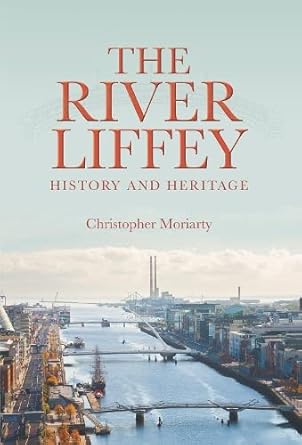
Living close to the River Liffey, when we were children we spent summer days swimming in it at Castletown. I also remember the filthy smell of the river in the 80s in Dublin city, with shopping trolleys and other rubbish jutting from the water as you looked down from a CIE bus window. Knowing what it was like in Dublin, who knows why we decided to swim in it further upstream!
I had always taken the Liffey for granted, as we often do with things we grow up alongside. It is sometimes when, later in life, we are reacquainted with them that true appreciation emerges. The landscape that I’ve had to return to is surprising me in many ways, looking at it with adult eyes is a very different experience. There is a solemnness to it but also a spark of intrigue about it that invites closer attention.
I happened to see this book in the local studies section of the village library and stupidly thought, “how could you write a whole book about the Liffey?” Wow, how wrong can you be at times in life.
Christopher Moriarty’s The River Liffey: History and Heritage follows the river along its entire course from its source in the Wicklow Mountains, through County Kildare and south Dublin, and into Dublin city and Dublin Bay. It discusses ancient lore, geology at the source, the agricultural and industrial landscapes of the valley, parks and gardens, architectural history in the urban area, and how the river meets the sea in Dublin – showing how it shaped settlement and development along its whole length.
Moriarty writes both scholarly and with affection for the river, making the book accessible to local historians, environmental enthusiasts, and general readers alike.
September: The Forager’s Calendar: A Seasonal Guide to Nature’s Wild Harvest by John Wright (2020)
If you’ve read my post on Acorn Tea: A Taste of the Forest, you’ll know that this was the first year I ever even considered foraging. I began with YouTube videos, and in one of them this book was recommended.
There is always a sense of reward when you prepare and cook a meal, but drinking the acorn tea felt different. Alongside the joy of having found a connection with the land and possibly even prehistoric foodways, there was an element of surprise – a kind of knowledge and understanding that can only come from direct experience, when wonder becomes something realised.
Although it isn’t a dedicated identification guide, The Forager’s Calendar is an ideal starting point for anyone beginning their foraging journey. It has a month-by-month structure, with plenty of photos, and gives a clear introduction to seasonal availability. Alongside practical advice, there are snippets of folklore, seasonal recipes, and natural history, making it a pleasure to read and return to.
Wright’s writing style is warm and, at times, witty, making this book a must-read for anyone curious about the wild foods our Earth has to offer.
If foraging isn’t something you ever thought about doing, or if you’re unsure where to start, this book is a gentle introduction. There has also been a recent rise in local wild food and nature courses which may help build confidence. However you decide to begin, I highly recommend it.
July: Homecoming by Cynthia Voigt (1981) [Age 10+]
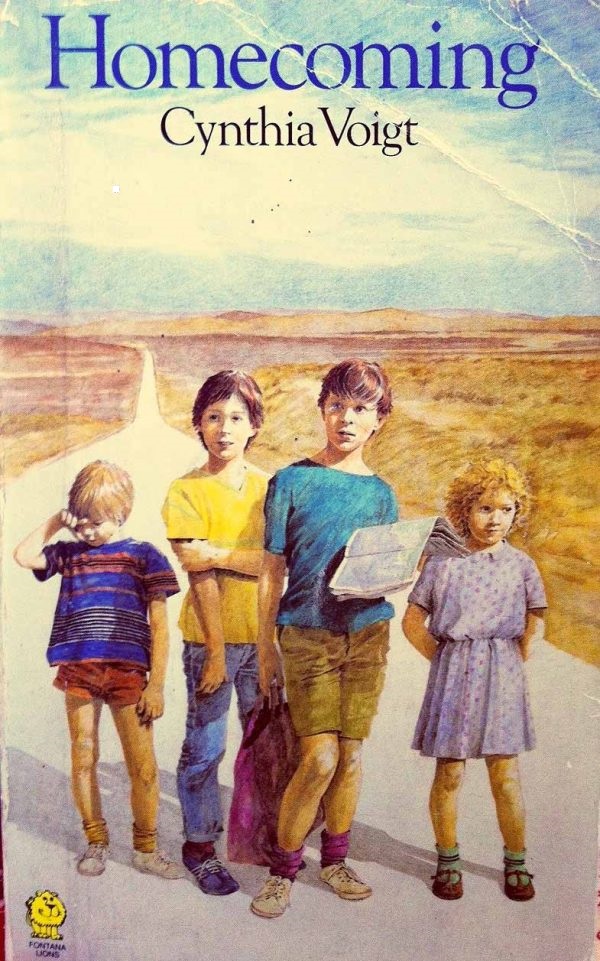
Homecoming is the most memorable book from my childhood. It is a moving and gripping story about Dicey Tillerman and her three younger siblings, who set out on a journey across rural Maryland after being abandoned by their mother. Facing hunger, danger, and uncertainty, the children rely on each other and the land around them, showing courage, resilience, and the power of family bonds.
Voigt’s writing is clear and evocative, bringing both the landscapes and the children’s inner lives vividly to life. The book is a timeless tale of survival, belonging, and connection.
“She had to know the signs of the land, the smell of rain, the shape of hills, the way the wind could change the day. The land spoke to her, if she listened”.
Although this is a book for ages 10-15, I love returning to stories I enjoyed as a child, and getting to understand them with adult eyes – what a comfort. What books have you returned to from your childhood?
Connection to the Past
June: Landscapes of Neolithic Ireland by Gabriel Cooney (1999)
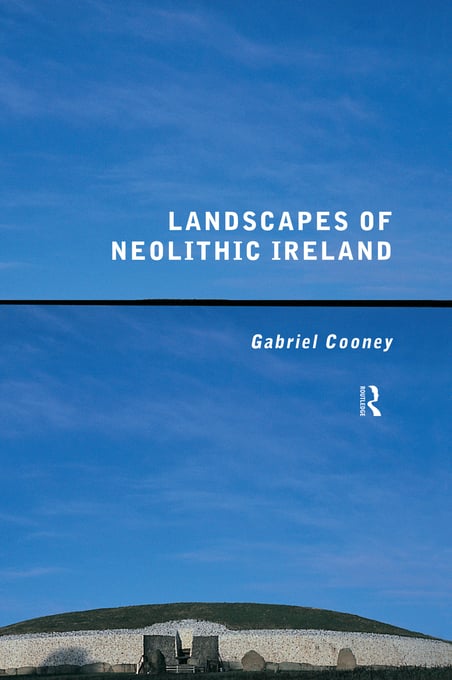
Stone is where it all began. It was the reason I fell into archaeology. I have always been unconsciously fascinated with stone, and without knowing very much about it, I am drawn to it. I suppose if I had my life over, I would be a geologist. But maybe I needed a little more soul involved (no offence, geologists).
In 2010, I decided to explore becoming a stone conservationist and took a uni module called Megalithic Ireland: Monuments for the Ancestors. A field trip – visiting sites such as Fourknocks passage tomb in Co. Meath, and Proleek Dolmen and Rockmarshall court tomb on the Cooley Peninsula in Co. Louth – changed my path in life forever.
Having emerged from the passage tomb, Prof. Gabriel Cooney began to discuss how people in the past were preserving the memory of their ancestors in monumental landscapes. At that moment, everything clicked into place. This reasoning about people in the past connected me to them, and the land forever.
Landscapes of Neolithic Ireland is essential reading for anyone interested in monuments, ancestors and the long-term relationship between people and land in prehistoric Ireland. Cooney’s clear writing style demonstrates that passage tombs, court tombs and other megalithic structures were not peripheral ritual features but central anchors within inhabited and worked landscapes. The dead and ancestors are shown to be active presences, shaping identity, territoriality and social continuity. This approach, influenced by anthropological and phenomenological perspectives, gives the material a depth that goes beyond chronology and distribution.
Maybe it is not only stone that I have to thank for leading me to archaeology but also Gabriel Cooney. He is one of the most inspirational archaeologists I have ever met. So eternally, thanks to both him, and stone!
August: Ancient Irish Tales ed. by Tom Peete Cross and Clarke Harris Slover (1936)
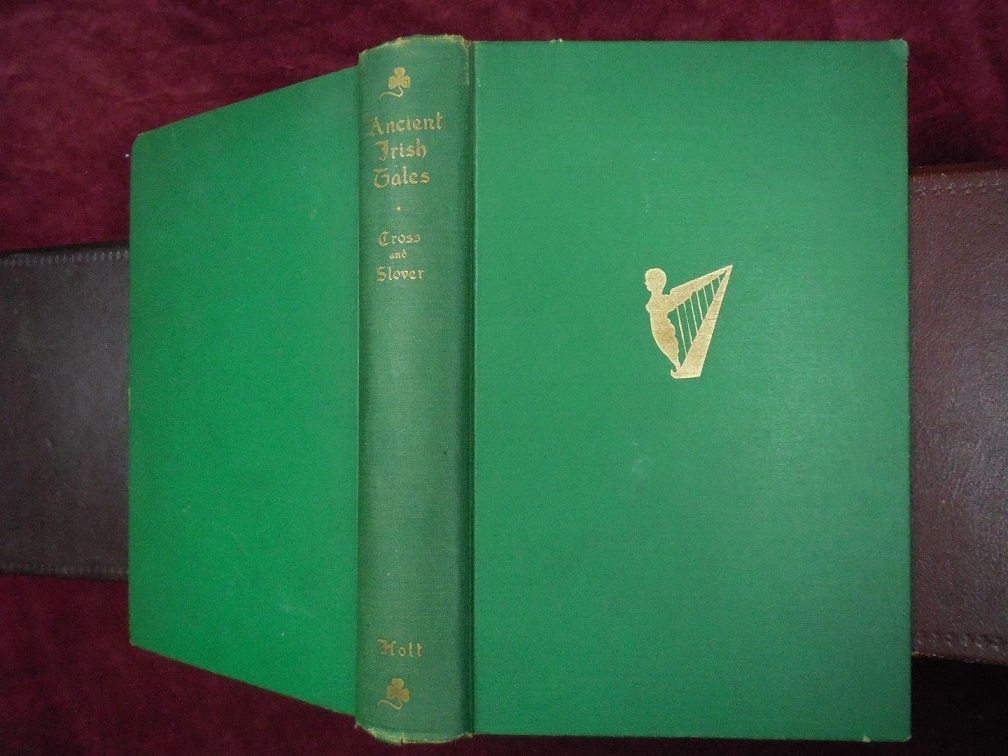
Ancient Irish Tales is an anthology that gathers stories from medieval Irish manuscripts. It includes mythological tales about gods and the Otherworld, Ulster Cycle hero tales (e.g. Cú Chulainn), and tragic (or empowering?) stories like “Deirdre of the Sorrows” (Longes mac nUislenn – The Exile of the Sons of Uisliu).
The tales use real landscapes and archaeological features as integral parts of the stories, not just settings. Hills, forts, plains, rivers, and ancient monuments are woven into the narratives as places of memory, power, and meaning, grounding myth and legend in the physical land and reinforcing the link between story, ancestry, and place.
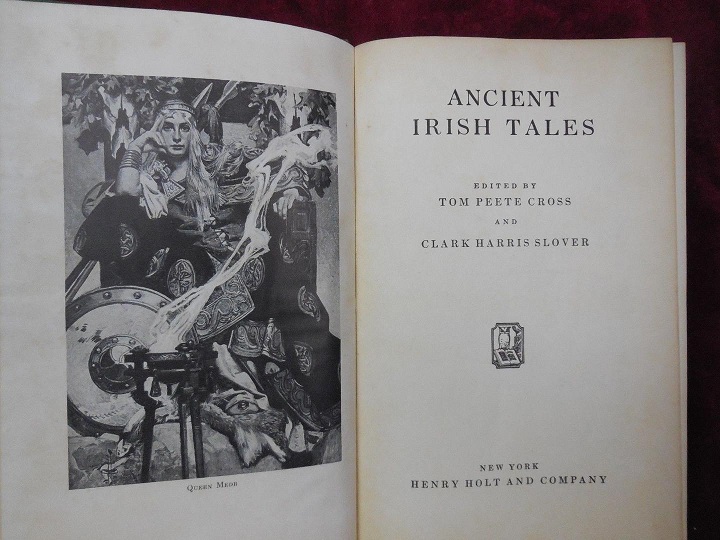
I love returning to the myths and sagas of Old and Middle Ireland. The storytelling style is so unusual – probably due in part to the fact that these stories were originally passed down through generations orally. The language often feels formal and abrupt, reflecting the rhythm and tone of the original medieval Irish. Dialogue can be direct and stylised, while descriptions of battles, landscapes, or the Otherworld are vivid, symbolic, and sometimes grotesque. This combination creates a distinctive voice that is at once scholarly, poetic, and evocative of oral storytelling traditions.
Each tale is a fascinating insight to our ancestors and their reverence for the land, and the storytellers of the past.
October: The Complete World of Human Evolution by Chris Stringer and Peter Andrews (2nd ed. 2011)
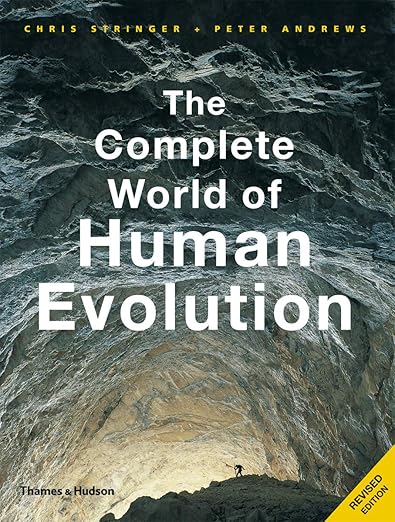
This year, I revisited this book while writing a post on Fire and One Million Years of Cooking. I had read some of it while in uni as it was on a module reading list. Generally, with palaeoanthropology – the study of human evolution and prehistoric humans – I find that the papers and books can be a bit overwhelming.
However, this is a comprehensive yet accessible book on human evolution. It covers topics ranging from the origin of primates, evolution of feeding, and early human species like Homo erectus, to the development of tools, and early art. The book is well-illustrated with images, diagrams, and reconstructions, making complex palaeoanthropological concepts easier to understand. Its structured sections make it easy to explore individual topics without needing to read straight through, which makes it suitable for both in-depth study and casual reading.
Connection to Flavour
March: Deliciously Ella by Ella Woodward (now Mills) (2016)
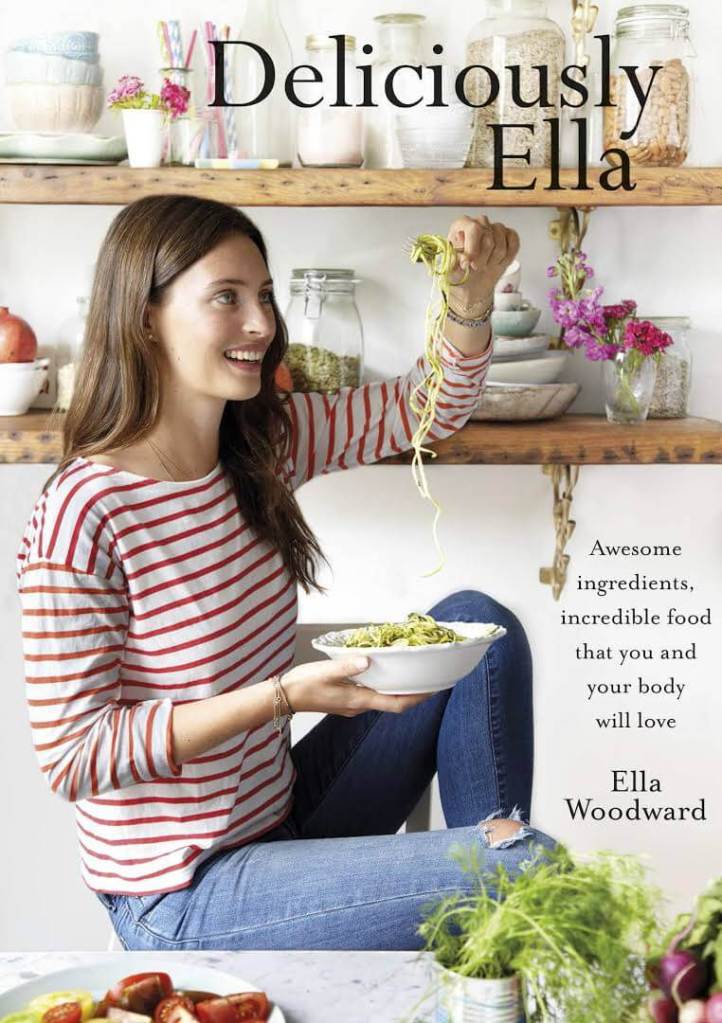
I first learned of Ella about ten years ago when I moved to England. My landlady had cooked a cauliflower curry from it, said it was gluten-free and that I was welcome to have some. I did and wow was it tasty. While eating I had a sift through the book. I had previously given up on cookbooks because most recipes had gluten in them, and since being diagnosed coeliac I really could not find any suitable cookbooks. I remember I tried one bread recipe and it was truly awful. So, I had given up.
Deliciously Ella was completely different to any cookbook I had seen before. In reading her introduction and story I felt an affinity with her because she had changed her diet to help her cope with an illness. Her recipes are plant-based, refined sugar-free, and gluten-free.
Adding new foods to my diet and learning about ingredients I had never heard of before was a little daunting but I felt I could trust her cookbook. She acknowledged that it is a big change to how you think about food but she made this wellness lifestyle feel doable. Her style of writing is positive and encouraging which was a breath of fresh air – her enthusiasm is infectious. It was the first hope of flavour returning to my world. And I wasn’t disappointed.
I often use this book and continually try, and repeat her recipes as I find that she has an excellent palate for flavour. It was with this book that my outlook changed about cooking, I began to enjoy it again.
April: Irish Traditional Cooking: Over 300 Recipes from Ireland’s Heritage by Darina Allen (1995)
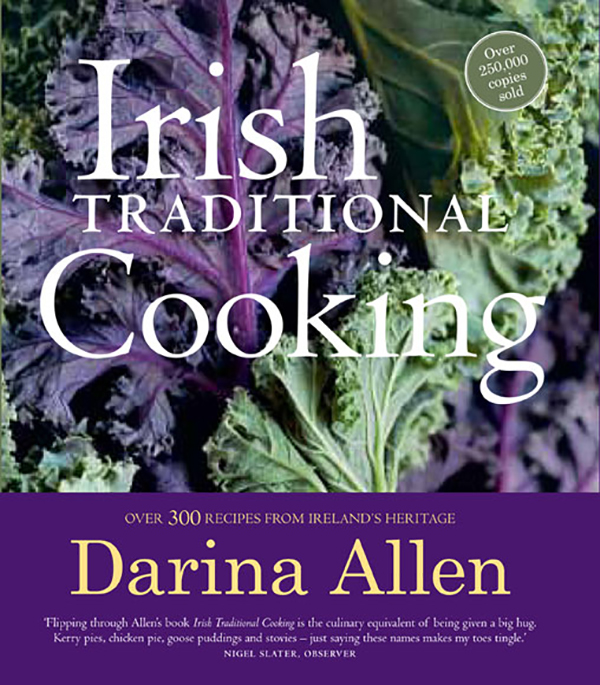
Darina is probably Ireland’s Julia Child or Delia Smith. I remember watching her TV programme in the 90s, Simply Delicious, with my mother (who never had any interest in cooking). When Darina talked about food I was understanding her passion. She, along with my aunt and friends’ mothers was where the idea that food – baking and cooking – could actually be enjoyed, validating my own love for it.
Without wanting to sound like a stalker, I had the great pleasure of being in the same room as Darina at various Samhain Festival events this year, while attending and volunteering with the Centre of Food and Culture – from the Food Policy Symposium to the Foods as Medicine talk and Sophie Morris1’ book discussion, Sophie’s Swaps. And no, I wasn’t brave enough to tell her, that in a way, she felt like a surrogate mother!
Fan-girling aside, as many people in Ireland may know, Darina Allen is the Don of Irish cooking, and the book demonstrates why. Every recipe, story, and insight in this book reflects her deep knowledge, respect for heritage, and passion for really good food.
The collection of over 300 recipes ranges from hearty, rustic dishes to lighter fare, all rooted in Ireland’s regional traditions. What sets this book apart is Darina’s attention to context – she doesn’t just provide clearly laid out recipes, but shares the history and cultural significance behind each dish, giving readers a deeper connection to Ireland’s food heritage.
Overall, Irish Traditional Cooking is more than a cookbook. It is a celebration of Irish culinary identity. For anyone interested in Irish cuisine, or in exploring traditional recipes with clarity, this book is an invaluable resource.
November: How to Make the Best Coffee at Home by James Hoffmann (2022)
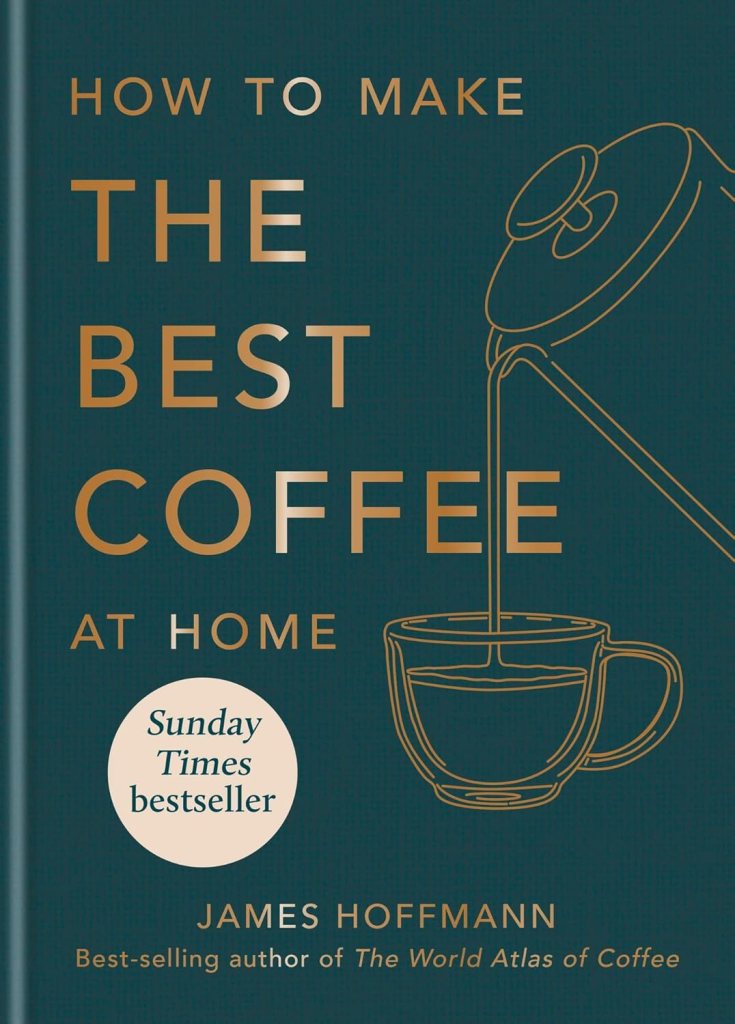
For many people who enjoy coffee, a trip to a coffee shop does the trick. I love them – you get delicious coffee and there is always a warm smile and sometimes even a friendly chat. But not everyone has the cash to splash on a daily trip to a café. The idea of learning how to make your own brewed coffee at home may seem daunting at first but James Hoffmann’s How to Make the Best Coffee at Home is an excellent guide to doing just that.
During the summer, I decided to take a barista course. While preparing for my practical test and searching for how to steam milk properly, I came across James Hoffmann’s YouTube channel. He is a World Barista Champion and coffee expert. If you are interested in all things coffee, I highly recommend taking a look at his content as well.
In this book, as with his YouTube videos, James is clear, informative, and down to earth. It is a practical guide to improving home coffee-making, covering how to choose good coffee, understand equipment, taste coffee properly, and master different brewing methods, including espresso and milk-based drinks. He explains technical ideas in an accessible way, making the book suitable for beginners while still useful for more experienced coffee drinkers. Overall, it is a reliable and well-structured book for anyone who wants to make consistently better coffee at home.
For anyone interested in coffee and who has some spare time on their hands, I would also recommend doing a barista course, even if you don’t intend to work as a barista. I have always enjoyed a good cup of coffee but the course made me fall in love with the entire process. There was so much to learn – about beans, terroir, taste, flavour, extraction, milk steaming, brewing methods, and drink styles. It was a joy to discover a whole new world. From time to time on this blog, I hope to share some coffee-making tips or recipes for coffee-lovers to enjoy (like Home Spiced Coffee).
Connection to Each Other
January: Hey Mom: stories for my mother, but you can read them too by Louie Anderson (2018)
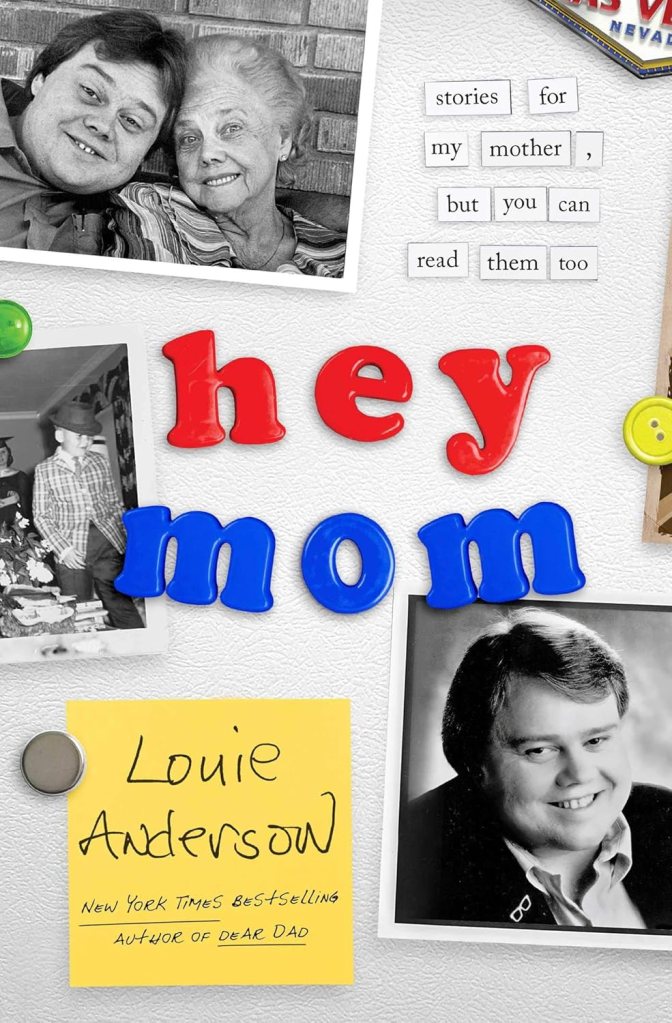
I have loved Louie Anderson since the first time I saw him in the 80s film, The Wrong Guys (anyone remember him shouting, “Franklyn, get on the raft!”? This makes me laugh to this day). He gained recognition in later years in the very brilliant TV series, Baskets with Zach Galifianakis playing Chip and Dale’s mother, Christine Baskets.
Last Christmas a friend gifted me this book together with his first book, Dear Dad: Letters from an Adult Child. Both books were written after his parents’ deaths in which he wrote letters to and reflections about them. Louie used the letters as a way to reflect on, process, and “talk” to his parents posthumously. For those of us who have suffered a loss of a family member or friend, sometimes we haven’t had the opportunity to express what they meant to us in life or to tell them things we needed to get off our chest. Louie, in trying to cope with his grief, writes these thoughts to his parents to confront unresolved childhood issues and to recount experiences, successes, and challenges since their deaths.
I read Hey Mom in January, the dullest month of the year but although the theme was heavy, I found the concept lovely. Louie comes across as honest and sweet just as I imagined he would be in life. As a comedian his humour is never far off yet he handles this sensitive topic with warmth and love. I would also recommend this on audiobook so that you have an opportunity to connect with Louie’s authentic, emotional, loving voice reading his own words, e.g. “Hey mom, I want you to know that I am taking better care of myself. I wish everyone would take better care of themselves…we just need the world to do the same”.
When having suffered a loss, I believe we still have a relationship with that person. Our memories keep people alive in our thoughts. Talking about them celebrates the joy they brought to our lives and the ways knowing them made us richer. Louie captured this beautifully, as did the 19th century poet, Thomas Campbell in his poem, Hallowed Ground:
“To live in hearts we leave behind is not to die”
May: The Village Effect by Susan Pinker (2014)
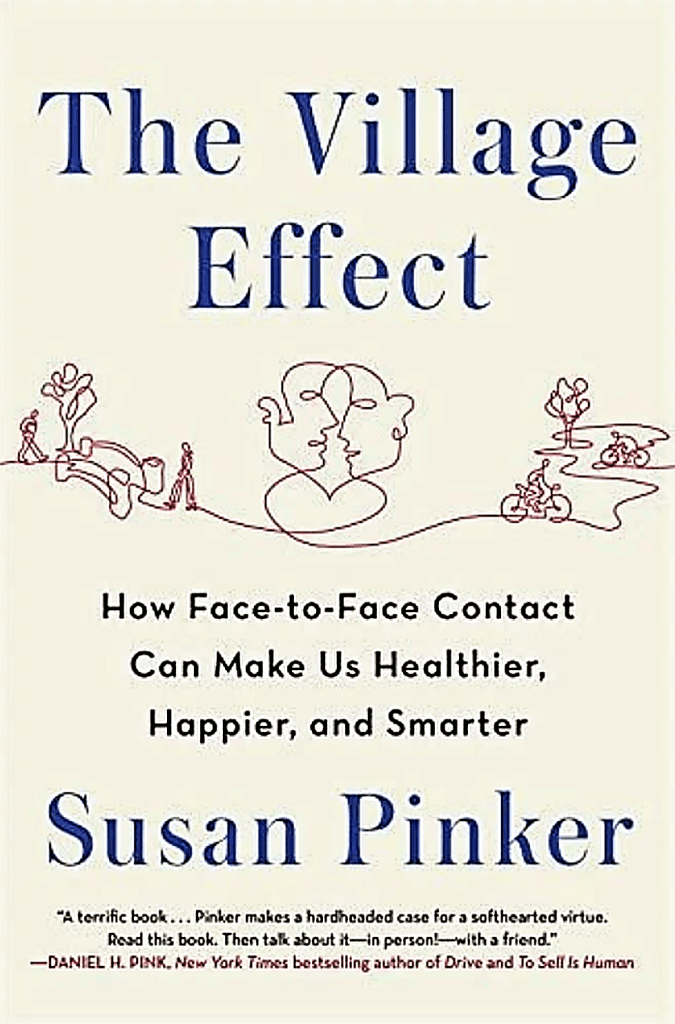
You may have read the post Why Connection Matters, where I explain my reasoning behind starting this blog – feeling less connected and more isolated in a fast-changing world. And recognising that, ironically, I am not alone in this.
I trained in childcare when I left school, and from time to time I enjoy reading texts that explore children’s development and the factors that help them thrive. While The Village Effect isn’t a parenting manual, and doesn’t centre on children, it is relevant to both children and adults. The book explores how relationships, community, and face-to-face interaction shape wellbeing across the whole lifespan, making it as meaningful for adults and communities as it is for families.
The Village Effect by Canadian psychologist, Susan Pinker, is a fascinating exploration of how human connection shapes our health, happiness, and longevity. She draws on decades of research to argue that our social networks – the everyday interactions we have with family, friends, neighbours, and colleagues – are central to our wellbeing. The book highlights compelling evidence that strong social ties can have as much impact on our health as diet, exercise, or even genetics.
Although it’s research-based, Pinker’s writing is warm and engaging. She combines scientific studies with vivid anecdotes from communities around the world, illustrating how real-life social bonds affect everything from cognitive function to lifespan. She also emphasises the value of face-to-face interactions, showing that online connections cannot fully replace the benefits of physical presence and shared experiences, “Not all types of social contact are created equal”.
For anyone interested in human behaviour, community, or simply how to live a healthier, more connected life, this book is a compelling reminder of why our social ties matter – and why fostering connection is at the heart of wellbeing.
For a quick introduction before diving into the book, you can watch Susan Pinker speak about her research and The Village Effect in her Google talk.
December: Chocolat by Joanne Harris (1999)
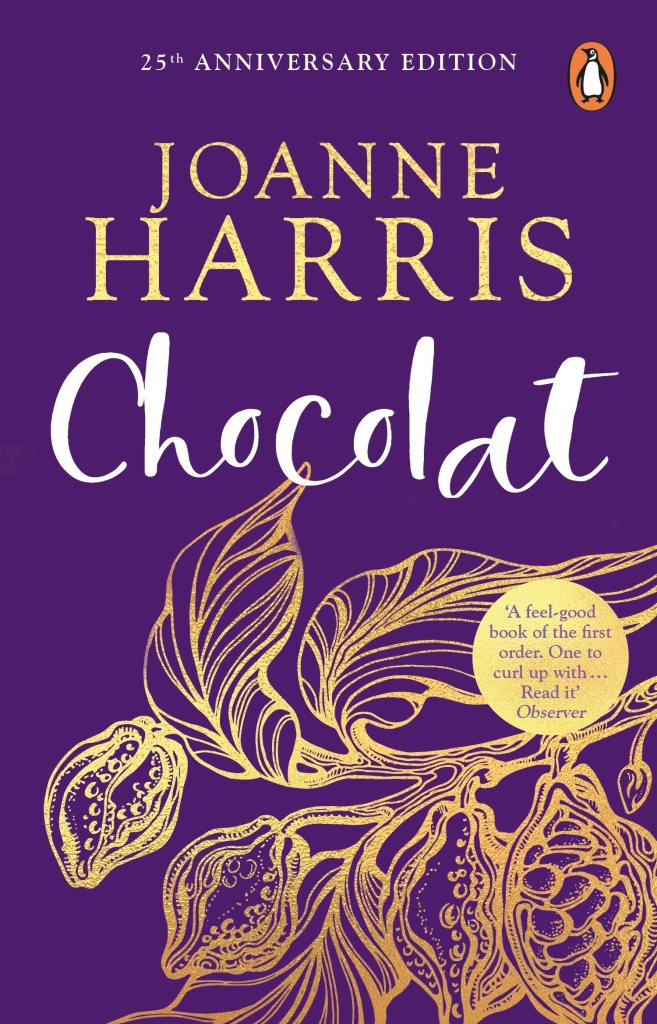
I have had this book on my bookcase since it came out. For me it was one of those books I wanted to savour but never got around to reading. I did a big clear out at the beginning of the month and vowed to read it. Before Christmas, I peeled my phone from my hand, opened the book and began to read. Again, I abandoned it. The first few pages told me that this was a book where I would need to slow down before even trying to read it. My stressed pre-Christmas brain was just not the right time.
After the Christmas rush – presents given, dinner eaten, dishes piled ready for washing, and wrapping paper still all over the floor – I sat down with a Baileys and ice. I breathed deeply, picked up Chocolat from the coffee table and began again to read. This time, the book, which had resisted me before, finally settled in my hands and guided me through its pages.
It is probably kind of cheating to include this book in the list since I haven’t finished reading it yet but even halfway through, it is representing much of what Oak & Oolite is about – connection to flavour, and of course, each other.
Or books you think other Oak & Oolite readers might like.
Happy reading for 2026! (image)
January 2026: If you live locally to Co. Kildare, we have started a new book club that aligns with the themes and values at the heart of Oak & Oolite. To join, find us on our Facebook group: Oak & Oolite Book Club.
Sophie Morris is an Irish food entrepreneur, health‑food advocate, and bestselling cookbook author. You may have seen her on her Facebook reels reading ingredient lists on products? Her book Sophie’s Swaps provides practical guidance on making healthier food choices, with tips for simple ingredient swaps and family‑friendly recipes. Sophie, I did meet, and she was friendly and gracious. ↩︎

Leave a comment