Collecting wild foods is something I never imagined I would do but recently I have been thinking about food and questioning the following:
- Why doesn’t food taste like it used to?
- Why are there so many ingredients I have never heard of in simple foodstuffs?
- Why is everything so full of sugar?
- Why are potatoes being imported from Chile to Ireland?
- Where exactly is the food that I eat coming from?
- Why is everything in plastic, and I can’t select something as simple as a couple of mushrooms, and then have to pay for plastic shopping bags?
- And why is everything so expensive?
Supermarkets are failing us. And in terms of human history, they’re a very recent phenomenon. Large supermarkets only became common after World War II when economic growth, suburban expansion, refrigeration, and mass production allowed them to expand rapidly. Before that, people obtained food from markets, local grocers, or grew it themselves. In the vast span of human existence, this shift to globalised, industrialised, and highly processed food supply chains is extremely new. The supermarket format works, but it is limited. They prioritise profit, convenience, and standardisation over health, sustainability, and true food culture. Will they last?
I had the privilege of having lovely grandparents who farmed, grew their own food, and had a quiet love, knowledge, and respect for nature. I don’t have land to grow my own food. But I want to get back to knowing where my food comes from and how it is grown.
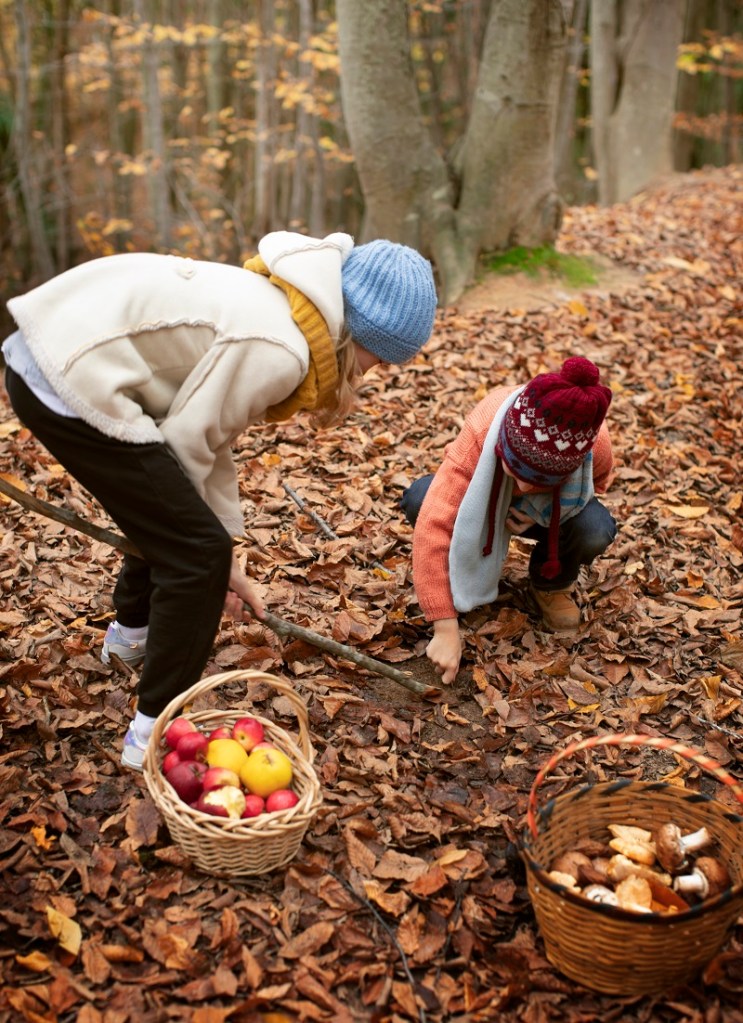
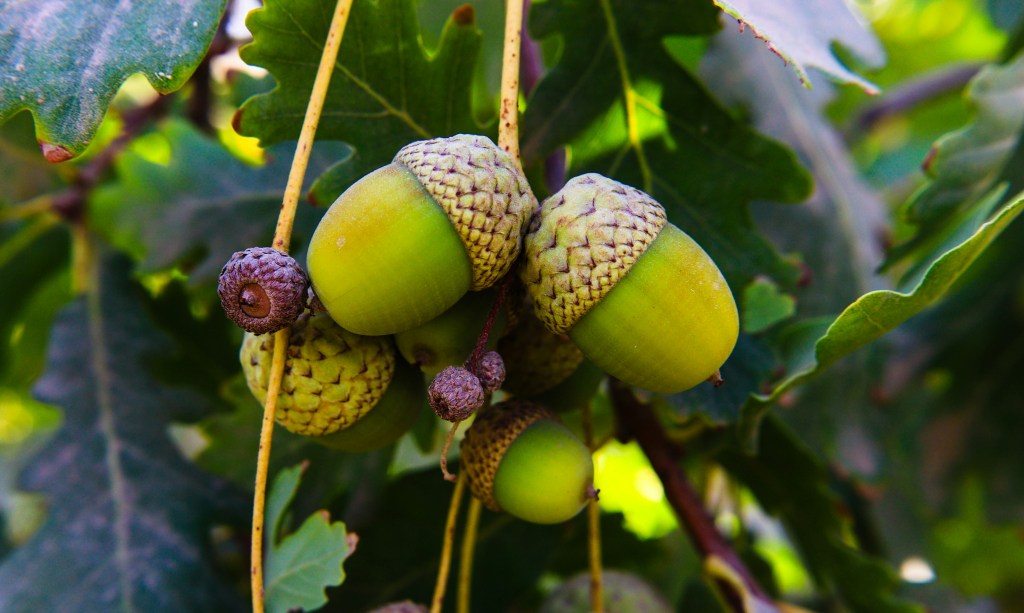
They say to start with what you know – I know my own townland – so, that’s where I started. I also searched youtube for foraging videos to give me an idea about what is safe to eat, and what’s in season. I live in Kildare and oak trees are everywhere. Acorns, here I come!
Acorns as Food
Acorns have served as a nourishing food source for many cultures throughout history and prehistory. Beyond being brewed into a tea, once their natural bitterness is removed, acorns can also be ground into a versatile flour for breads, porridges, biscuits, and cakes. They provide a rich, earthy flavour along with a balanced source of carbohydrates, healthy fats, minerals, and vitamins especially A and C.
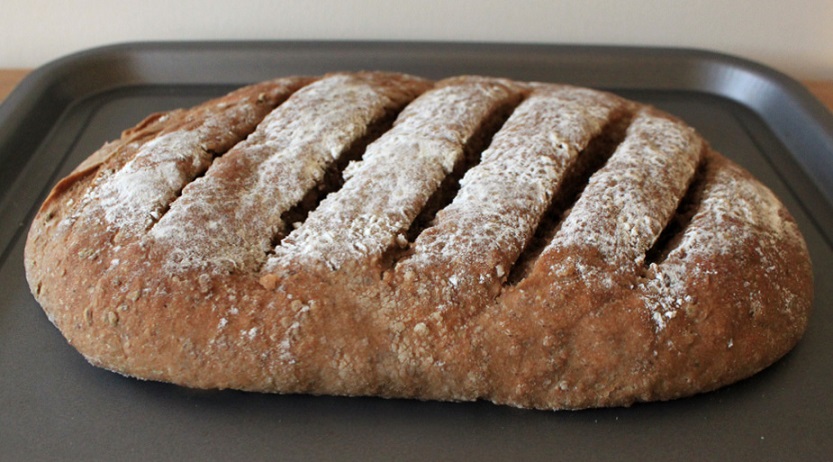
Given the labour-intensive and time-consuming preparation required for acorn flour, combined with historical and classical sources describing acorns primarily as famine food or pig fodder, and the small quantities recovered on archaeological sites, it has been assumed that acorns were not used as a major or routine human staple. However, to gain a fuller understanding, we can turn to other cultural traditions and recent studies exploring acorn use in the past (see Mason, Rosenberg, and Šálková et al).
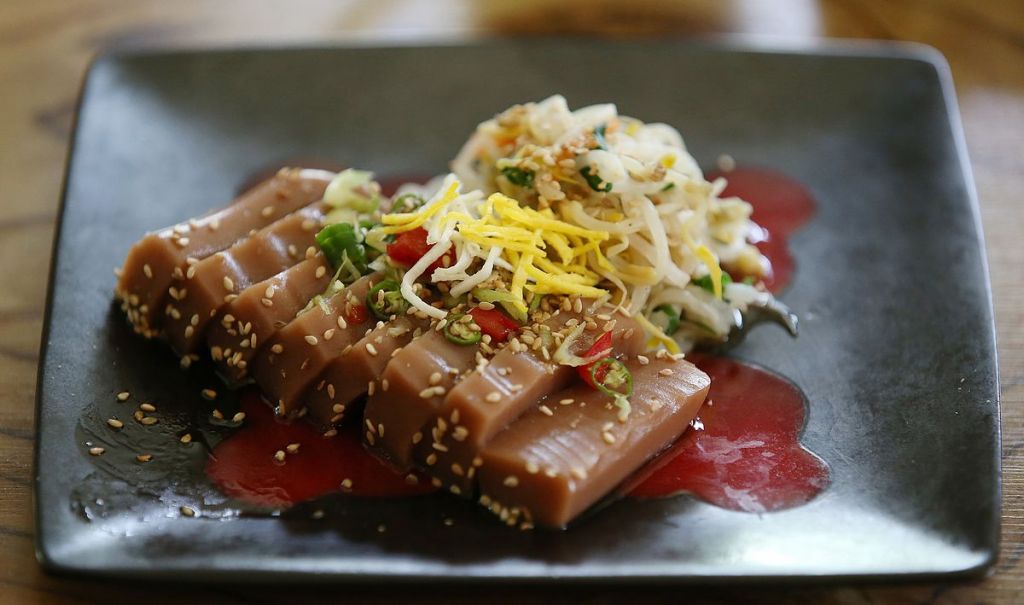
In different parts of the world, acorns remain an important food. In Korea, they are used to make dotori-muk (acorn jelly that is often served in salads, soups, or as a side dish), noodles, and porridge after leaching to remove bitterness. In Japan, acorns were traditionally eaten as a survival food in rural regions. Across North America, Indigenous peoples – especially in California – used acorns as a staple, making mush (porridge made from acorn meal), porridge, flatbreads, and flour, while some southwest tribes prepared acorns occasionally for flour or mush, all following careful methods to remove tannins.
In Ireland, there is no clear archaeological or historical evidence that people routinely ate acorns. Archaeologically, acorn remains are rare or absent at prehistoric and early historic sites, and historically, Irish texts (e.g. Brehon law) mention acorns only as woodland produce or pig fodder, not as human food. Kelly states, “Some Old and Middle Irish literary references suggest that acorns…were consumed by humans when other more palatable food was in short supply”2. It remains plausible that acorns were eaten occasionally or seasonally, in times of scarcity, or prior to farming, but there is no direct evidence to confirm this.
Recently, there has been a quiet rise in foraging and wild food gathering. You may have noticed more people out picking blackberries or collecting mushrooms? With the growing number of foraging courses popping up around the country, it feels like we might be seeing a return to our past – a reconnection with the foods and flavours that have long been part of our landscape. And so maybe acorns can become a part of our present and future seasonal diet.
Foraging in the Forest
One chilly autumn morning last month I woke excited to go in search of oak trees and acorns. Thankfully, I live quite near a forest so I left early with no breakfast in my belly, sleep in my eyes, and bag in hand, off I went on my acorn hunt, “To the trees!” I reached the forest and went along paths many a time frequented as a child. It was an unusual experience, going in search of a tree, looking at all the different leaves and listening to their whispers with the soft breeze blowing and rustling to the sky. And, maybe to me. With eyes to the ground seeking fallen nuts, “Come on, oak tree, reveal yourself to me”.
Then, all of a sudden, there they were. Acorns! Brown and bright green nuts all across the forest floor. I thought it might be awkward if people had come upon me while I was foraging but it was fine. Two ladies walked by with their dogs and we all bid each other good morning. I gathered up a few, and with small stash in hand, off I trotted home to experiment making some acorn tea.
How to Make Acorn Tea
Collecting the Nuts
The main oak tree species in Ireland both produce acorns suitable for eating:
- Pedunculate oak (Quercus robur – “oak strength”; English oak) – These are the most common native oaks in Kildare. They prefer lowland soils and river valleys. Their acorns are long-stalked.
- Sessile oak (Quercus petraea – “oak of rocks”) – These are found mainly in upland or slightly poorer soils. They are less common than pedunculate oak in Kildare and are most likely in south-eastern parts of the county. The acorns sit directly on the twigs without stalks.
Acorns fall from the oak when they are ready for consumption, usually from late September to early November with October being peak time to collect. But you will know their ripeness by their colour – brown. Greens are also edible but will be more bitter with higher levels of tannins (this can be removed by leaching or roasting).
Avoid acorns that are cracked, shrivelled, mouldy, chewed by animals, or have a small hole in them (this is a sign that it has been infected by insects). Try not to collect in plastic as this can cause them to go mouldy (a mistake I made, see below). Choose firm, plump brown acorns for making tea. Three nuts was enough for one cup of tea.
Washing and Sorting
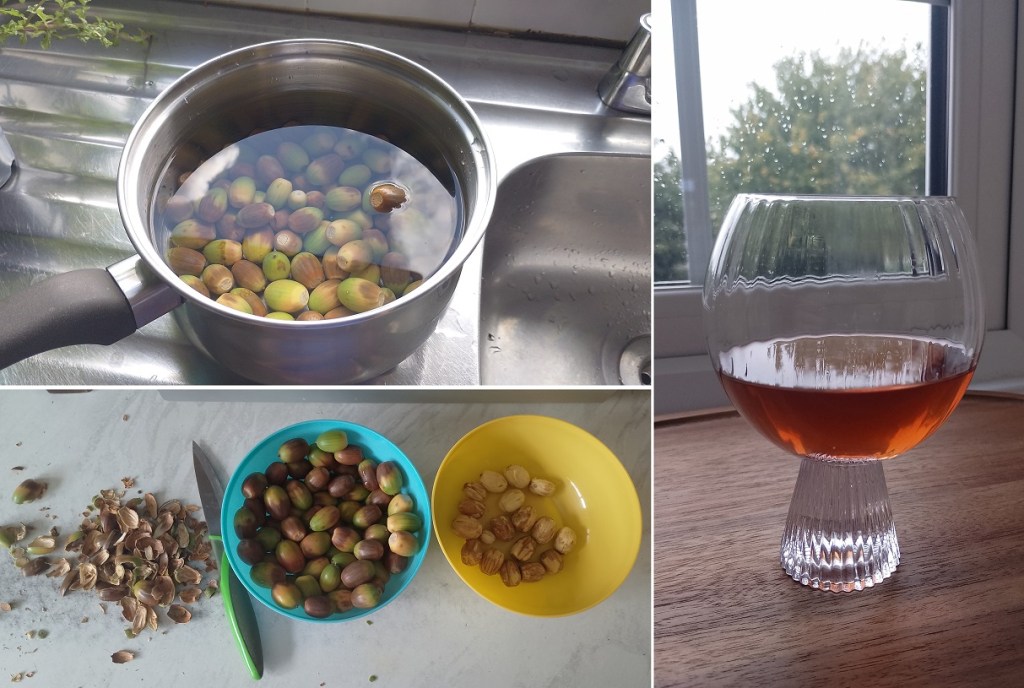
Place the acorns into a bowl or saucepan of water. Washing also reveals bad ones you may have missed when collecting. Any that float are usually dried out, damaged, or infested with insects, while the healthy ones sink to the bottom. Similar to eggs – the bad ones will bob up.
Rinse the good acorns in cold running water, scrubbing gently with your hands or a soft brush. Spread on a tea-towel, pat dry and allow to air-dry briefly before you start shelling.
Shelling and Tasting
Either use a pounding stone/ hammer to break the shell or edge the shell open with a small sharp knife to begin the tear and then use your fingernails to finish the job3.
After shelling the first one, I tasted my first ever acorn: the flesh was a vibrant, creamy white with a slight glisten when split. The flavour was woody and a little bitter. It looked far better than it tasted. I decided to make some tea from them.
Making the Tea
- For two cups of tea I roasted six acorns on parchment paper at 150° C fan for 10 minutes.
- When ready, I added them to a saucepan with two cups (about 400ml) of boiled water over a low-medium heat (setting 2).
- After heating for 5 minutes, I strained the liquid with a sieve and served.
The tea was a beautiful brandy-like colour, and I was surprised at how quickly the acorns infused the water. The flavour was unique and tasted so much better than that of the freshly opened, unroasted nut. It was rounder than black tea, though still slightly tart. I added a teaspoon of honey and that was really lovely. Strangely, the flavour improved as it cooled. A true taste of the forest.
- Image source: “Dotorimuk with bean sprouts” by Rikka, Wikimedia Commons, licensed under CC BY-SA 4.0 ↩︎
- Kelly, F. (1997) Early Irish Farming. Dublin Institute for Advanced Studies: p. 307 ↩︎
- I collected about 90 acorns as I had planned on making flour. I made the tea that day and left the remaining acorns overnight in a bowl. The next day mould had started to form so I had to discard them back into the forest. Shelling the good batch of 85 acorns took about 1.5hrs – roughly a minute each. And, my goodness, by the end my nails were in bits. ↩︎


Leave a Reply