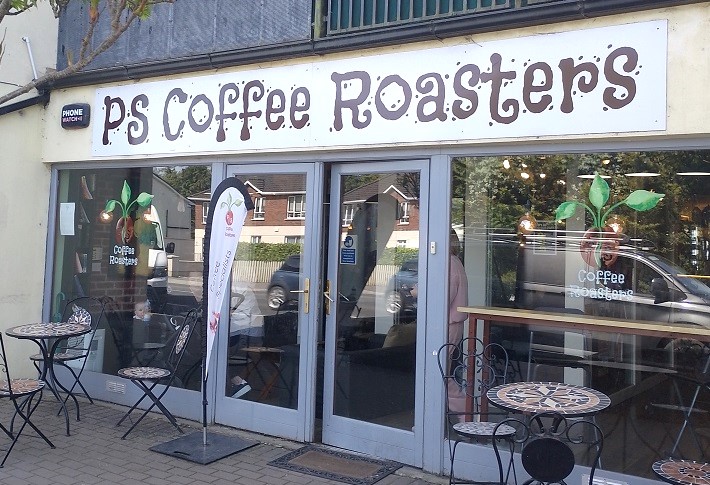
PS Coffee Roasters, a coffee roastery with coffee shops in Naas and Clane in Co. Kildare, was founded in 2015 by Straffan natives, brothers Peter and Simon. During spring, I travelled out to their roastery in Kilcullen to chat with Simon. His passion was clear. As we spoke, he emphasised that quality coffee and strong environmental values should go hand in hand, along with a commitment to transparency, sustainability, and building lasting relationships with producers.
Early Growth and Expansion
PS Coffee Roasters’ early years were small-scale and demanding. In 2016, they opened their Naas shop as both a coffee shop and roastery, using a 1.3kg machine to produce small batches with long turnaround times and significant labour input. As Simon explained, early production required tight scheduling and careful batch management, with only about 1.1kg of usable coffee per roast after weight loss. Growth was gradual, but in 2018 the business expanded with a larger 15kg machine at their newly-opened Clane branch, allowing 10kg batches and significantly reducing working hours.
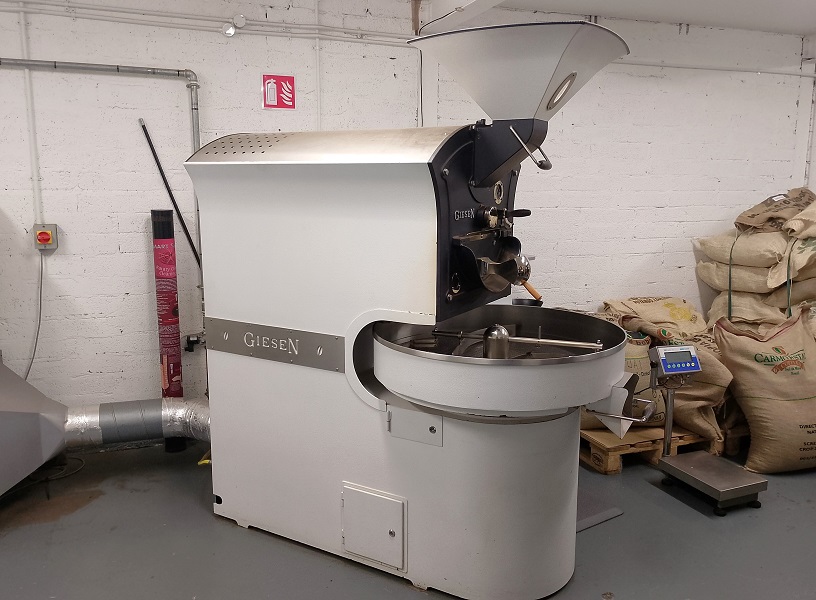
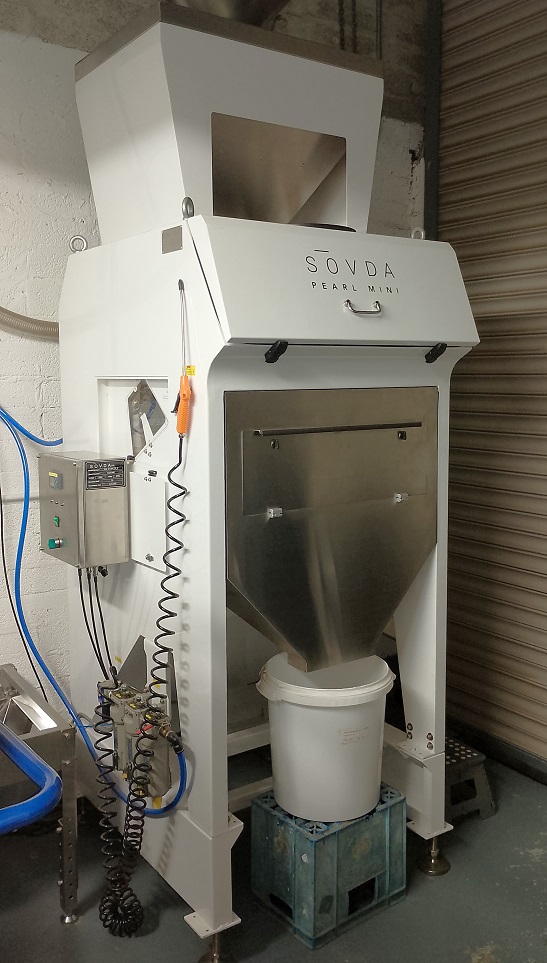
In 2020, they moved into their Kilcullen roastery, gaining more space and investing in equipment such as a colour sorter to improve consistency and quality. This shift to larger facilities increased capacity, improved working conditions, and enabled stronger quality control.
In addition to serving coffee, PS Coffee Roasters also sell their own beans in-store and via wholesale supply. They now supply around ten coffee shops in Co. Kildare, alongside customers across Ireland. Their involvement in a cupping1 project with James Hoffmann2, also helped increase European reach, with PS Coffee Roasters being the only Irish roaster involved.
The 2024 Decaf Project was a collaboration led by James Hoffmann exploring improvements in decaffeinated coffee. Tasting kits were distributed across Ireland and Europe so participants could cup alongside James in a live online session. It focused on sourcing and showcasing high-quality decaf coffees processed using 4 different decaffeination methods, with the aim of demonstrating that decaf can match speciality coffee standards in flavour and consistency.
Beyond the Expected
A key part of PS Coffee Roasters‘ philosophy is attempting to move beyond predictable, standardised flavour profiles. Simon noted that many coffee shops rely heavily on Brazilian coffees for their consistency and broad appeal. While he acknowledges that they taste great, with over ten years in the coffee industry and a personal passion for coffee, he would like to see a more diverse, characterful selection offered in coffee shops.
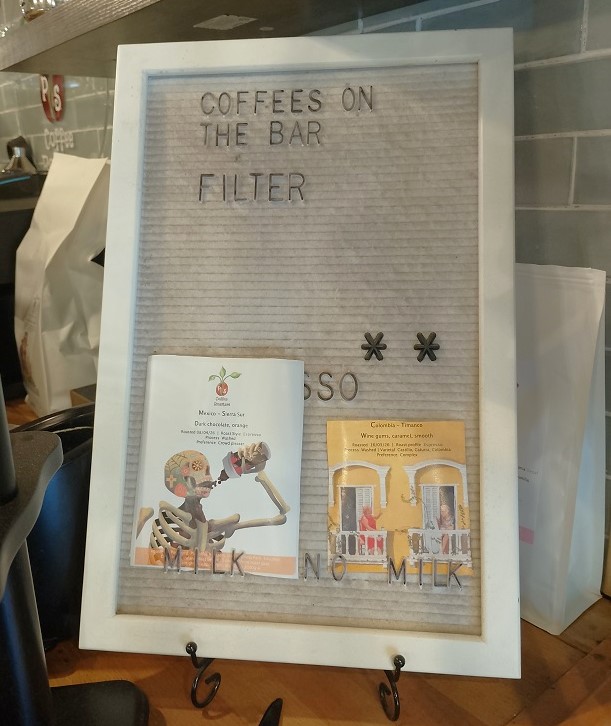
In their coffee shops, they display a sign at the counter suggesting which beans suit coffee with milk and without. And if you’re not sure what to choose, their friendly baristas are always happy to advise.
Sustainability – More Than a Buzzword
Sustainability is a term often bandied about, but PS Coffee Roasters take it seriously, as reflected in how they operate, and the decisions they make across the business.
Their sourcing is built around long-term relationships with import partners such as Caravela and Nordic Approach as well as direct engagement with farming communities through projects facilitated by Belco. One example is their involvement in the Bob-O-Link project, where they were able to visit farms, meet producers’ families, and see processing and laboratory facilities first-hand. This project also promotes regenerative farming3 practices, supporting a gradual transition away from heavy chemical dependency towards more sustainable agricultural systems.
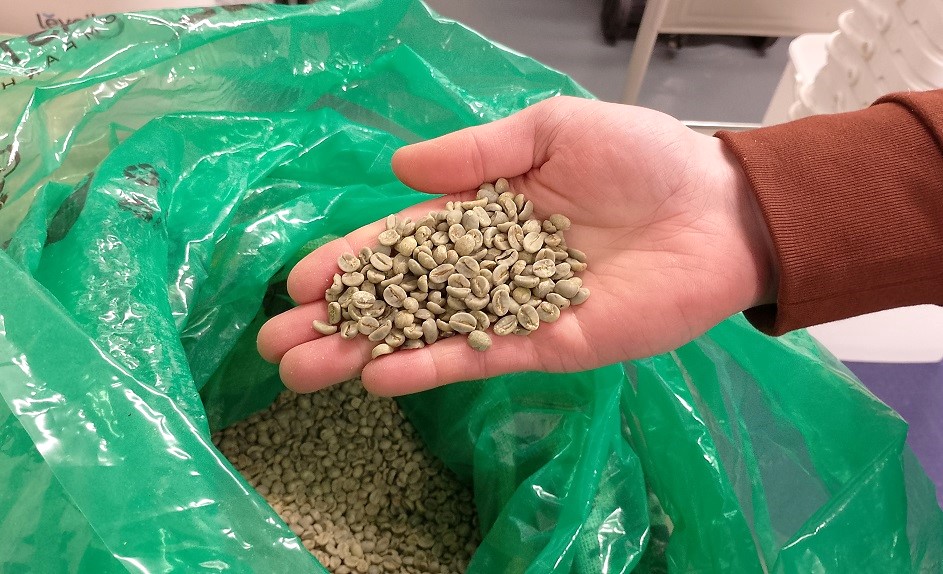
For PS Coffee Roasters, transparency is central in demonstrating fairness in pricing and sourcing. They include provenance, farmgate prices4, FOB prices5, and the length of their relationships with producers on their packaging.
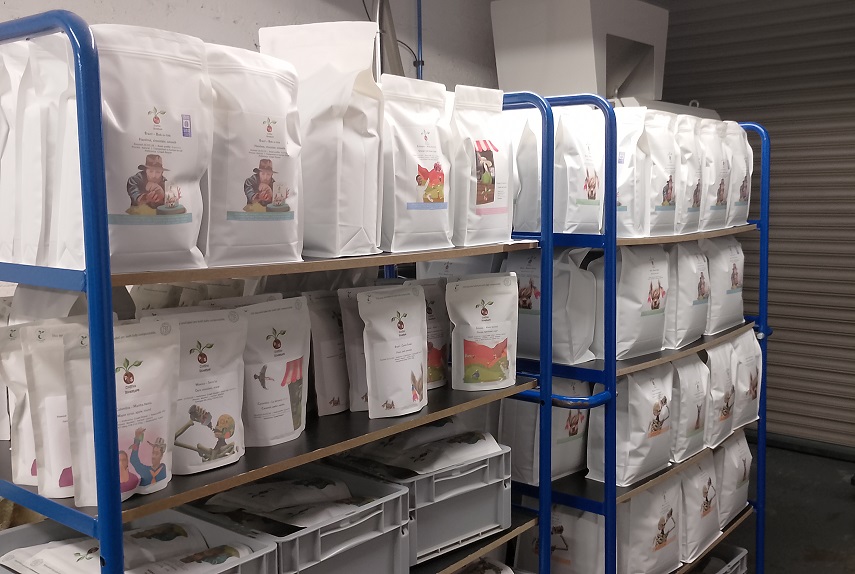
Sustainability is also embedded in their approach to packaging. They have invested heavily in packaging systems, including certified compostable materials – cellulose-based inner packaging, and are transitioning to PCR (post-consumer recycled) plastic bags as part of their wider effort to reduce environmental impact.
Connecting Coffee and Community
PS Coffee Roasters has recently partnered with Brontie – Ireland’s first café gifting platform, set up by Maynooth native, Kevin.
Brontie allows customers to send a coffee or café treat directly to someone as a shareable digital link. Customers choose an item such as a coffee, from a participating café6, purchase it online, and send a link via text, WhatsApp, or email. The recipient then redeems it in person at the café, usually by scanning a QR code at the counter. The idea is to make gifting feel more personal than a traditional voucher.
This helps enhance customer experience, shifting a visit to a coffee shop beyond a simple purchase and into a shared, social experience.
☕
Oak & Oolite is now on Instagram, helping you explore County Kildare through coffee, flavour, and place. Come join the journey: @coffeeinkildare
💚
- Cupping is a coffee tasting method used to evaluate aroma, flavour, body, and overall coffee quality. Ground coffee is placed in cups and covered with hot water. After a few minutes, the crust that forms on top is broken and the aroma is assessed. The coffee is then tasted by slurping it from a spoon so it spreads evenly across the palate, allowing for clear comparison between samples. ↩︎
- James Hoffmann is a British coffee expert, author, and YouTuber known for his work in speciality coffee. Since winning the World Barista Championship in 2007 he has become one of the most influential figures in the global coffee industry. He’s also written several books, including The World Atlas of Coffee and How to Make the Best Coffee at Home (which I highlighted on Oak & Oolite‘s top reads of 2025).He is widely recognised for making speciality coffee knowledge accessible to a broader audience. ↩︎
- Regenerative farming is an approach to agriculture that focuses on improving soil health, increasing biodiversity, and restoring ecosystems, while reducing reliance on synthetic fertilisers and chemicals. ↩︎
- Farmgate price refers to the price paid directly to the farmer at the point of production, before costs such as processing, export, transport, and import are added. ↩︎
- FOB (Free on Board) is the price of coffee once it has been processed, packed, and prepared for export, including delivery to the port of shipment, before international shipping, import, and distribution costs are added. ↩︎
- Participating Kildare cafés: Clane: PS Coffee Roasters; Leixlip: SoCoffee, Typo, Willow & Wild, Your Daily Fix; Naas: PS Coffee Roasters; Maynooth: Lily’s, Shoda Market Café, Typo, Willow & Wild. ↩︎


Leave a Reply